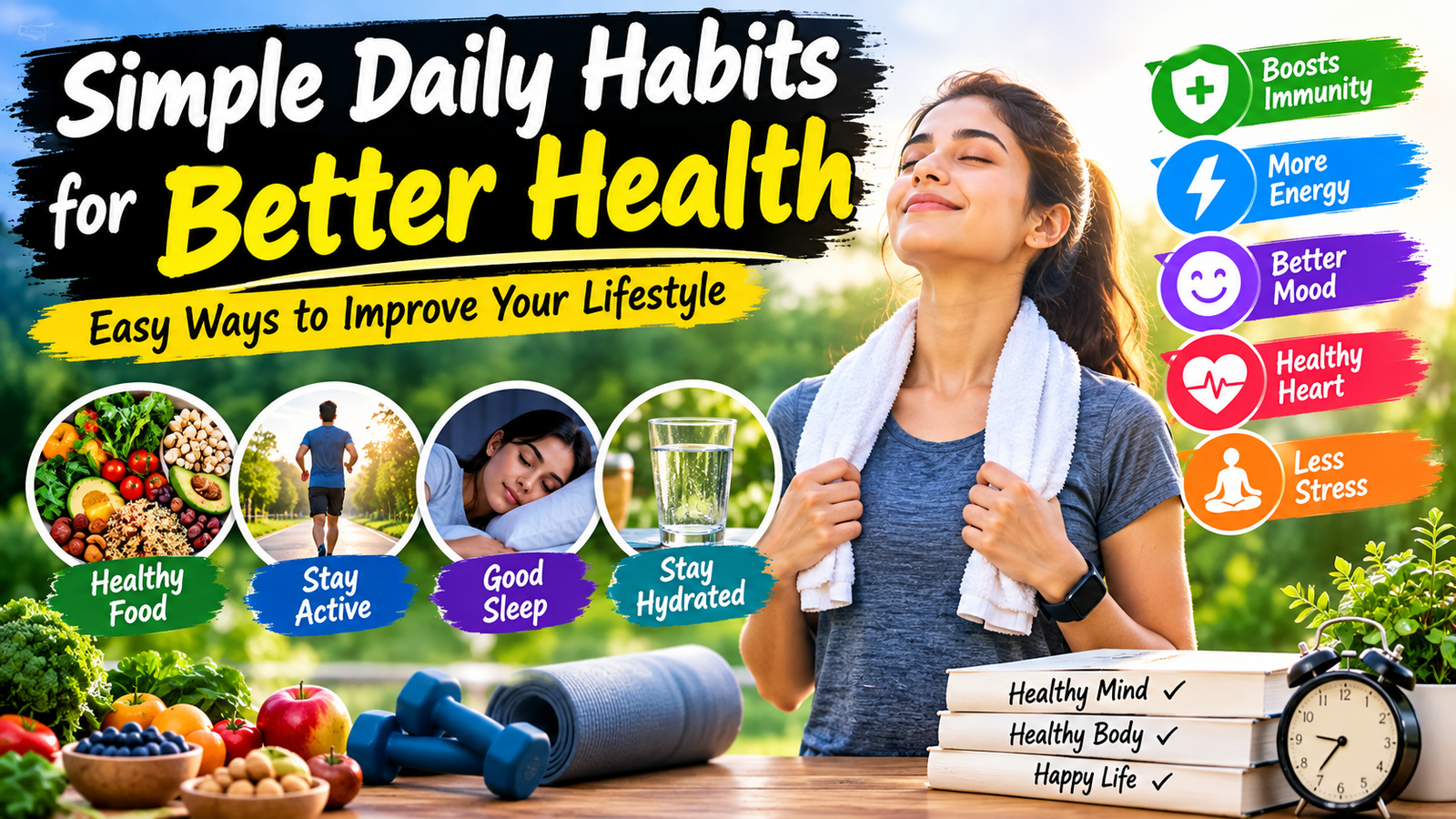
Good health is one of the most important parts of a happy and productive life. Many people think that staying healthy requires complicated diets, expensive supplements, or intense workouts, but simple daily habits can make a meaningful difference. A healthy lifestyle is usually built through consistent choices involving food, physical activity, sleep, hydration, stress management, and regular health checkups.
Simple Daily Habits for Better Health Modern lifestyles often involve long working hours, excessive screen time, irregular meals, and insufficient physical activity. Over time, these habits can affect energy levels, sleep quality, weight management, and overall well-being. The good news is that small improvements can be easier to maintain than sudden and extreme lifestyle changes.
Eat a Balanced and Nutritious Diet
Simple Daily Habits for Better Health Food provides the energy and nutrients the body needs to function properly. A balanced diet should include a variety of foods rather than focusing on a single food group. Fruits, vegetables, whole grains, pulses, nuts, seeds, and appropriate sources of protein can all contribute to a nutritious eating pattern.
It is also useful to limit excessive consumption of highly processed foods, added sugars, and foods that are very high in salt or unhealthy fats. This does not mean that every favorite food must be completely avoided. Instead, focusing on balance and portion sizes can make healthy eating more sustainable.
Simple Daily Habits for Better Health Drinking enough water is another important part of daily nutrition. Individual fluid requirements can vary depending on factors such as activity level, climate, age, and overall health. Water should generally be the primary source of hydration, while sugary drinks can be limited.
Stay Physically Active Every Day
Regular physical activity supports many aspects of health, including cardiovascular fitness, muscle strength, mobility, and mood. Exercise does not always have to mean spending hours in a gym. Walking, cycling, swimming, stretching, dancing, sports, and home workouts can all contribute to an active lifestyle.
People who spend long periods sitting can benefit from taking short movement breaks throughout the day. Even simple activities such as walking for a few minutes, using stairs when appropriate, or performing light stretching can help reduce prolonged inactivity.
Adults should gradually work toward regular moderate physical activity according to their abilities and health status. Anyone with an existing medical condition or significant physical limitations should consider discussing an appropriate exercise plan with a healthcare professional.
Prioritize Sleep and Mental Well-Being
Sleep plays an important role in physical and mental health. Poor sleep can affect concentration, mood, energy, and daily performance. Maintaining a consistent sleep schedule, creating a comfortable sleeping environment, and reducing unnecessary screen exposure before bedtime may help improve sleep habits.
Mental well-being is equally important. Stress is a normal part of life, but prolonged or excessive stress can affect both emotional and physical health. Simple activities such as spending time with family, taking a walk, practicing relaxation techniques, maintaining hobbies, or talking to someone you trust can support emotional well-being.
If feelings of anxiety, sadness, stress, or emotional difficulty become persistent or interfere with daily life, seeking professional support can be an important step.
Regular Health Checks and Healthy Lifestyle Choices
Preventive healthcare can help identify certain health problems before they become more serious. Regular checkups, appropriate vaccinations, dental care, and recommended screening tests can be useful depending on a person’s age, family history, and individual risk factors.
Avoiding tobacco products and limiting alcohol consumption can also support long-term health. Maintaining a healthy weight through balanced nutrition and regular physical activity may provide additional benefits, although healthy body composition can vary between individuals.
It is important to remember that health advice should be personalized. A diet or exercise routine that works for one person may not be appropriate for another. People with medical conditions, pregnancy, ongoing symptoms, or specific nutritional needs should consult a qualified healthcare professional for individualized guidance.
Conclusion
Better health does not require perfection. Small and consistent habits such as eating a balanced diet, staying active, getting sufficient sleep, managing stress, staying hydrated, and keeping up with preventive healthcare can contribute to overall well-being.
The most effective lifestyle changes are often the ones that can be maintained over the long term. Instead of making many extreme changes at once, choosing a few realistic habits and gradually building upon them can make healthy living easier and more sustainable.